

Message from our lab
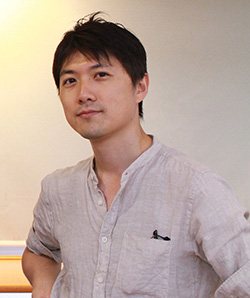
I would like to take this opportunity to share with students who are considering joining a research laboratory or pursuing graduate studies what a university lab is like, and what our own laboratory is currently striving to achieve.
Although I am now a university faculty member, I must admit that when I was in high school, I had never really thought about what goes on at universities or what I wanted to do once I became a university student. I had textbooks in front of me—math, Japanese, English, physics, and so on—with clearly defined areas to study. Anything beyond those boundaries felt unnecessary, so I didn’t go beyond them. That mindset didn’t change right away, even after entering university. What shattered that way of thinking was being assigned to a research lab.
The first thing I realized was: there is no textbook. Of course, there are textbooks for subjects like organic chemistry, but simply doing what’s written in them holds no meaning in a research lab. A university laboratory is not only a place to educate future researchers—it is also expected to be a site of cutting-edge scientific research at the global level. And because of that, there is no end. The tasks you need to do (which gradually become things you want to do) are limitless. That is the kind of place a university lab is. So, what should students aim for when joining a research lab?
This is just my personal view, but I believe the goal should be to nurture yourself as a researcher. And this is only possible through a sense of ownership and self-awareness. I hope that students in our lab will develop this sense of awareness as early as possible (of course, some already have it from the beginning). In our laboratory, every student is engaged in cutting-edge organic chemistry research. We also provide an environment where everyone, regardless of their year or position, can engage in open discussion. At first, students may simply follow instructions from me or their seniors in the lab, but through active discussion and accumulated knowledge and experience, they gradually begin to design their own experiments and interpret the results on their own. I hope you will enjoy that process of growth.
Organic chemistry is a fascinating field. You can form or break bonds between atoms and create entirely new molecules. You never know exactly what product will result until you actually carry out the reaction. Sometimes you obtain your target compound in high yield, and it crystallizes beautifully like snow. Other times, side reactions dominate and you end up with a melted-chocolate-like liquid. But sometimes, hidden in that chocolatey mixture is a compound with a very unique structure—a gem that could become the foundation of a new reaction. That is the nature of organic chemistry. It is not only the faculty who build a lab. In fact, it is the students who play the central role. Together with all of you, I look forward to building our laboratory—a place we can call our own—with all the joys and challenges that come along the way.
Ryosuke Matsubara
page top