Aging is known to cause various changes in appearance. In hair, these include graying, waviness, and a loss of strength and elasticity, while in the skin, aging leads to pigmentation, wrinkles, and sagging. Our Collaborative Research Laboratory focuses on these age-related changes and aims to develop and commercialize innovative cosmetic technologies based on scientific evidence.
To achieve this goal, we conduct research on hair and skin anti-aging technologies using functional cosmetic ingredients developed through advanced green chemical technologies. We also employ state-of-the-art analytical techniques, including scanning electron microscopy (SEM), Fourier-transform infrared spectroscopy (FT-IR), and mass spectrometry (MS), to scientifically evaluate the condition of hair and skin, as well as the properties of cosmetic ingredients.
Our major research topics include:
In addition to these research activities, we collaborate across a broad range of fields, including packaging development, marketing strategies, and branding, to promote the social implementation and commercialization of our research outcomes. By integrating engineering with business management, we pursue interdisciplinary research that creates new value, addresses societal challenges, and fosters the development of new markets.
To improve age-related changes in hair, including loss of firmness, body, and smoothness, we have developed a novel functional ingredient through our proprietary bioconjugation technology utilizing ATS (Tostea). We are currently conducting research to elucidate the mechanism by which this ingredient acts on hair and to establish technologies for its high-quality and stable production.
Our technology has been shown to effectively straighten African hair, which is characterized by extremely tight curls. The results indicate that the technology not only improves hair waviness and curl, but also contributes to modifying the twisted structure of the hair fiber.
By applying this technology to hair care products and hair quality improvement treatments, it is expected to enable the realization of hair textures and hairstyles that have previously been difficult to achieve, while also creating new possibilities for hair design. Bioconjugation technology utilizing ATS is expected not only to serve as a foundation for next-generation hair care technologies, but also to introduce new value to the global hair cosmetics industry as an innovative technology.

※The figure is a computer‑generated image created to illustrate the research concept.
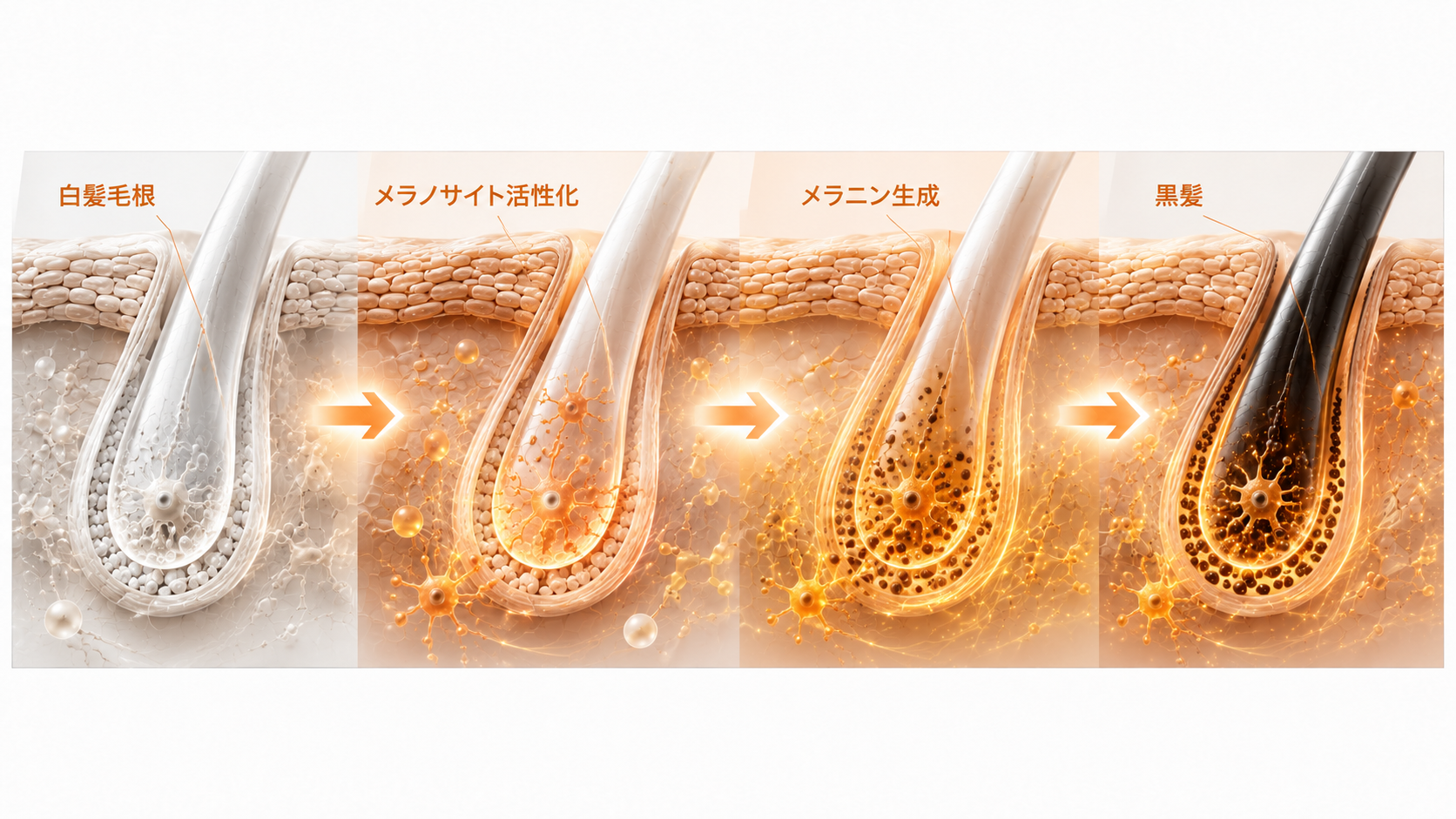
Focusing on gray hair associated with hair aging, we are conducting research and development on a novel hair coloring technology that utilizes the color-forming reaction of DHI (dihydroxyindole), an intermediate compound produced during the melanin biosynthesis process. DHI is a naturally occurring compound in living organisms. By utilizing this naturally derived color development mechanism, we aim to develop next-generation gray hair care technology with enhanced safety and environmental compatibility compared with conventional oxidative hair dyes.
In addition, we are working on sustainable bioproduction technologies for DHI-based pigments and catalysts, as well as the development of hair color containers designed to reduce environmental impact. Through these efforts, we are pursuing integrated research and development covering the entire process from materials to finished products.
Globally, cosmetic product development is increasingly expected to address not only safety and efficacy, but also the use of naturally derived and biodegradable materials, sustainability, animal-origin-free ingredients, and cost-effectiveness.
This research aims to realize next-generation hair coloring technology based on the DHI color-forming reaction while meeting these six key requirements: Feel, Natural, Biodegradable, Sustainability, Animal Origin-Free, and Cost-Effectiveness. As an innovative hair coloring technology that considers both the environment and human well-being, the technology is expected to contribute to the development and social implementation of more sustainable hair coloring solutions.
※The figure is a computer‑generated image created to illustrate the research concept.
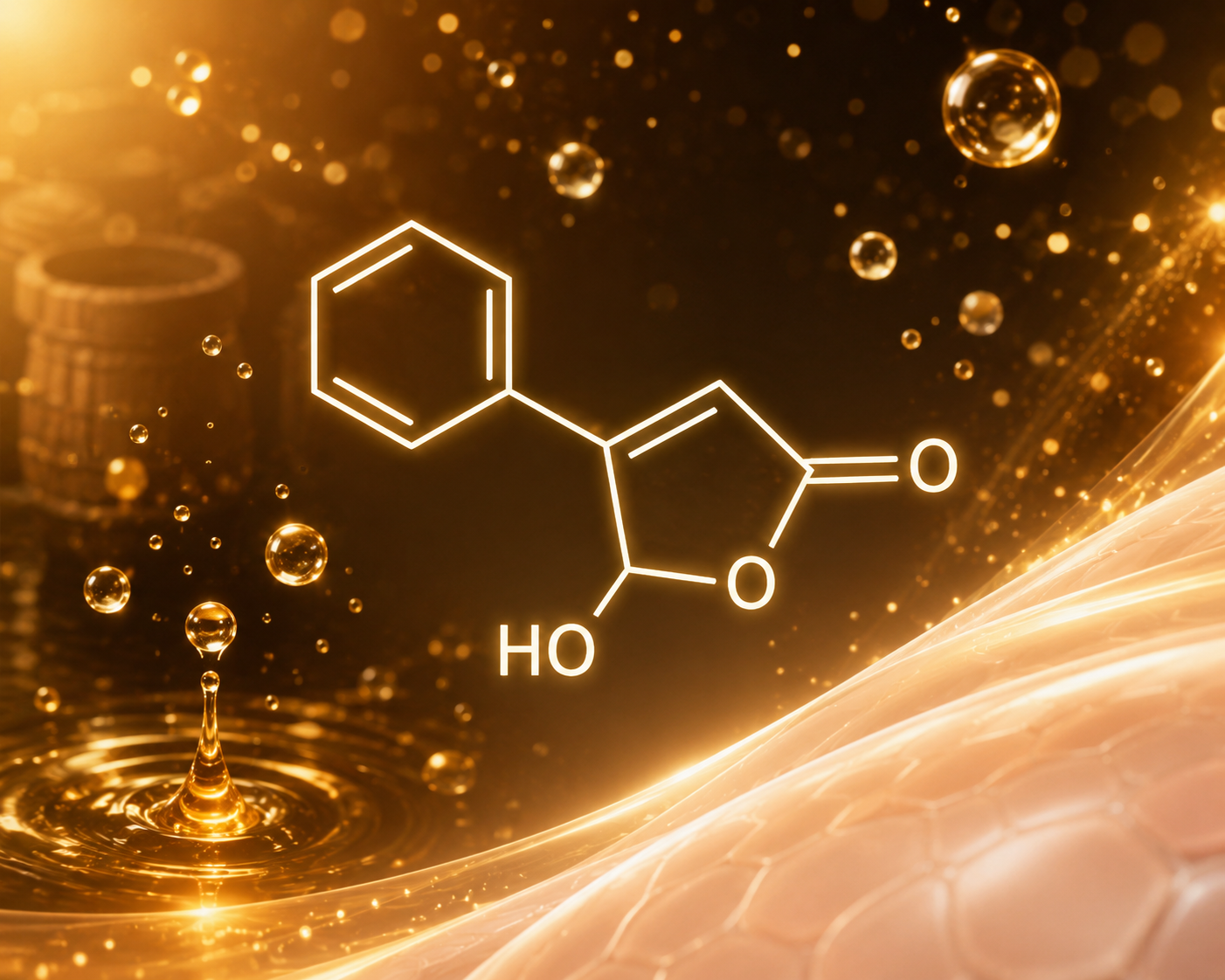
We have discovered that the functional ingredient Fureglide®-1, identified from fragrant vinegar traditionally consumed for its health benefits, exhibits PPAR-γ ligand activity and ARE activation activity. More recently, we found that Fureglide®-1 also possesses XRE inactivation activity and suppresses the expression of Artemin and MMP-9. In addition, RNA-seq analysis using keratinocytes and fibroblasts suggests further biological functions, and we are continuing to investigate the mechanisms and properties of Fureglide®-1. Furthermore, this ingredient has also been identified in Japanese black vinegar, and in collaboration with black vinegar manufacturers, we are working to elucidate its biosynthetic pathway.
We aim to develop technologies that improve wrinkles and skin sagging caused by aging, as well as sensitive skin and atopic dermatitis induced by air pollution. Fureglide®-1, a functional ingredient discovered in fragrant vinegar, which has long been believed to provide health benefits, as well as black vinegar extracts containing this ingredient, are expected to have high added value as cosmetic ingredients.
※The figure is a computer‑generated image created to illustrate the research concept.